

Jesus Christ Commended the Church at Ephesus for Its Faithfulness, Perseverance, and Defense of Biblical Truth—Yet Warned That Something Essential Was Missing from Its Devotion to Him.

📚 DISCOVER TROY ANDERSON’S BESTSELLING BOOK COLLECTION
Explore Troy Anderson’s inspiring collection of books on biblical prophecy, faith, spiritual warfare, and revival—including his bestselling collaborations with Pastor Paul Begley Revelation 911 and Trump vs. the Beast. Discover powerful insights and extraordinary stories to strengthen your faith and deepen your understanding of the times.
THE BOOK OF REVELATION EXPLAINED
Understanding Biblical Prophecy, the End Times, and the Ultimate Victory of Jesus Christ
PART I · THE REVELATION OF JESUS CHRIST
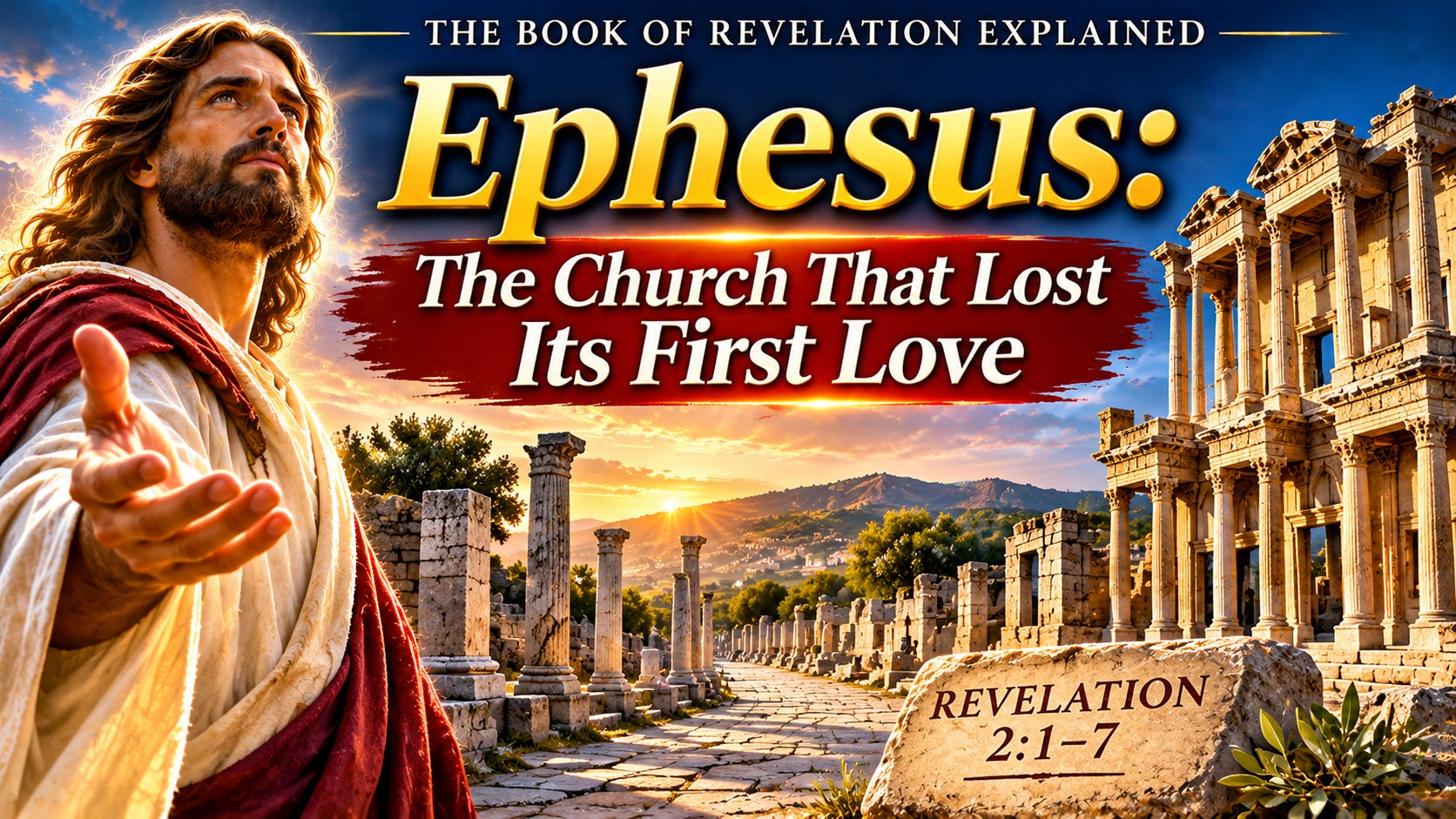
Chapter 3: Ephesus — The Church That Lost Its First Love
Understanding Revelation 2:1–7, the History of Ancient Ephesus, and Christ’s Call to Remember, Repent, and Return to Our First Love.
When a Faithful Church Begins to Lose Its Heart
Can a church remain committed to biblical truth, resist false teaching, work tirelessly for the Gospel, and still drift away from the love that first brought its members to Jesus Christ? This is one of the most searching questions raised by the Book of Revelation, and it lies at the heart of Christ’s message to the ancient church at Ephesus.
The congregation at Ephesus was not condemned for abandoning sound doctrine or surrendering to persecution. On the contrary, Jesus Christ recognized its hard work, spiritual endurance, and determination to confront false apostles. These believers had remained steadfast under pressure and had demonstrated remarkable vigilance in protecting the integrity of their faith. Yet beneath these commendable qualities, the risen Lord identified a serious spiritual deficiency that threatened the very foundation of their relationship with Him.
Revelation 2:4 (KJV)
“Nevertheless I have somewhat against thee, because thou hast left thy first love.”
These words are extraordinary because they reveal that outward faithfulness and inward devotion are not always the same. A congregation can possess theological knowledge, maintain religious activity, and defend important truths while gradually losing the warmth of its love for Christ and others. The warning to Ephesus reminds us that Christianity is not merely a system of correct beliefs or religious obligations, but a living relationship with Jesus Christ that should transform the heart and shape the way believers worship, serve, and love.
Nearly two thousand years later, the message remains deeply relevant. In an age of theological debates, cultural conflict, demanding ministry schedules, and constant distractions, Christians may become so occupied with defending their convictions or fulfilling religious responsibilities that they neglect prayer, compassion, worship, and intimate fellowship with God. Christ’s words to Ephesus challenge us to examine whether our spiritual activity still flows from genuine love.
Support Our Mission—Become a Paid Subscriber Today. Your support helps sustain the research, writing, editing, and production behind Revelation Watchers, allowing us to continue sharing biblical prophecy, spiritual discernment, hope, and the Good News of Jesus Christ with readers around the world.
The Church That Had So Much—and Yet Was Missing Something Essential
Ephesus was one of the most influential cities in the Roman province of Asia, located in what is now western Turkey. Its bustling commercial life, impressive public buildings, and famous Temple of Artemis made it a center of economic, cultural, and religious activity. Within this environment, the Christian community developed into an important center of early missionary work and biblical teaching.
The Book of Acts records the Apostle Paul’s extensive ministry in Ephesus, including his teaching, the spread of the Gospel, and the opposition that arose as Christianity challenged established religious practices. The church received significant spiritual instruction, and Paul’s later farewell address to the Ephesian elders contained urgent warnings about false teachers and dangers that could arise from within the Christian community.
Yet when Jesus addressed Ephesus in Revelation 2, He identified something that even sound teaching and diligent service could not replace: love. What did Christ mean by their first love? Had the believers lost their original devotion to Him, their love for one another, or both? Why did He warn that their lampstand could be removed, and how could a church that had accomplished so much recover what it had lost?
These questions lead us into one of Revelation’s most important lessons about spiritual renewal, genuine discipleship, and the relationship between truth and love.
Continue the Journey Through Revelation
The Book of Revelation Explained is a 30-part biblical study series by Troy and Irene Anderson, presented through the Revelation Watchers Prophecy Library. To our faithful paid subscribers, thank you for your generous support! Your partnership makes these in-depth studies possible and helps us share God’s Word and spread the Gospel. This series is our special gift of appreciation to you.
We believe everyone should have access to God’s Word, regardless of financial circumstances. If you cannot afford a paid subscription, please email RevelationWatchers@gmail.com for complimentary access. We warmly invite you to become a paid subscriber to enjoy the complete series and partner with us in sharing the Good News of Jesus Christ.
